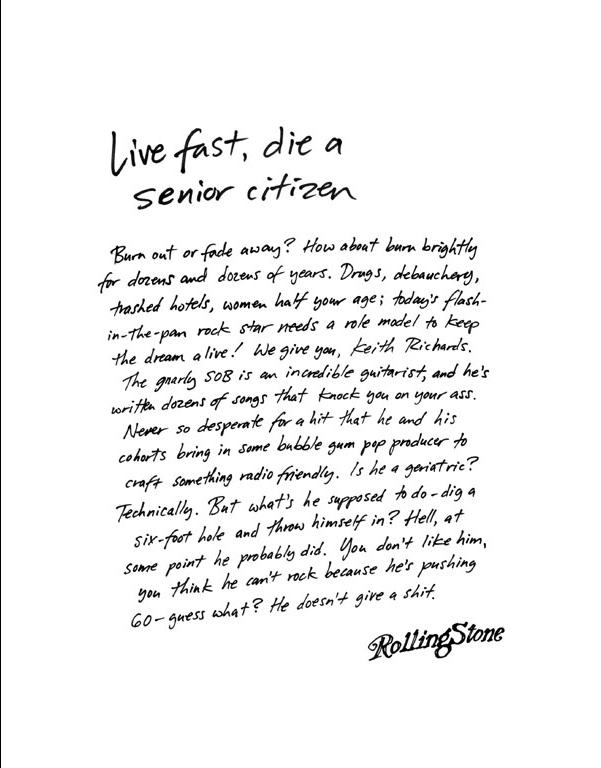
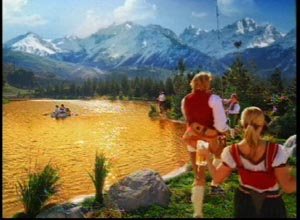
Showing posts with label advice. Show all posts

Saturday, May 26, 2012

A feature on My Dead Friend Sarah: A Novel by Peter Rosch


I had the opportunity to listen to Peter Rosch when he first dispensed career and creative advice in 2006. Now, he has written his first novel, My Dead Friend Sarah: A Novel, and I had the chance to ask him a few questions in a mini-interview.

What have you been up to since leaving the ad industry?

Well, I’m still in it. I don’t think I’ll ever leave it completely. After trying my hand at directing commercials for a couple of years and freelancing quite a bit, I did take a six-month hiatus. My wife and I moved down to Costa Rica to see what that might be like. We loved it, and I doubt I’d have found the time to write My Dead Friend Sarah if we hadn’t gone there. Ultimately though, we ended up coming back to New York to see some family, and after a freelance gig with BBH led to selling a large campaign due out this summer for AXE, I accepted a full-time spot again. BBH was good to me the first time around, and I couldn’t he happier to be back and making great stuff surrounded by incredibly intelligent people. Even if this or future books take off, I can’t say I’d even not want to be involved in the daily creation of stuff advertising afford the creative mind. At the end of the day, even with the headaches, it’s still one of the sweetest gigs I know.

Why write a novel?

I’m a pretty long-winded guy, and a novel seemed like the best place for me to explore my voice. I had a story that I knew needed telling, and while I considered doing a screenplay, I surmised the chances of that story being heard were a lot better if I just took a gamble on self-publishing the sucker. So far, so good as over 10,000 people have purchased the book. That is well past my expectations, and knowing that there are people out there reading it, is pretty damn exciting. After years of writing ads, part of what I liked about doing a book was the idea that it would be mine and mine alone. Nobody to tell me the logo needed to be bigger, no testing, etc. It made the whole experience of putting it out there a touch scarier, waiting for people to respond and review it, and I’m sure if it hadn’t been well received I’d probably not be talking to you about it now.

Did being a CW help your writing skills?

Totally helped. Writing commercials really demands a focus to crisp story telling. You only have thirty or sixty seconds to tell a tale, and I think I applied quite a bit of that to the novel. I wanted it to move quickly, and not meander to far from what a reader needed to know. I would think that fifteen years of writing commercials had to have had some effect on my ability to engage people, and hopefully that shows in this effort. On the flip side, I suspect writing a novel will only make me a stronger writer of ads too. All of it just feeds on itself, and only in the last few years have I come to realize that practice really does lead to growth. I probably couldn’t have written this book had I not started keeping a blog of short stories. Committing to writing something other than ads is a great exercise for any writer in the business.


Any future book plans?

Definitely. I’ve started the next one already, and am hoping to get something out before the end of the year. Not that I’m full-time again it won’t be as easy to make time for it, but I’m really passionate about the whole experience, and I tend to get up too damn early. If I don’t sit down and write something, I just end up out on my deck chain smoking, and that’s no good.

How hard was it to create a kindle version?

Creating an ebook version of My Dead Friend Sarah was a challenge. But to have someone else do it meant spending two or three hundred bucks, so I just committed to trying it first. After about a week of nearly non-stop formatting, adjusting, downloading it to my own iPhone, checking it, tweaking and repeating over and over again I had something I could live with. I’m sure there are easier ways, or will continue to be easier ways to put one together, but I used some free shareware that was a little buggy. I’m not sure, but I think Adobe has software to do it. The only thing I’d advise against is just running a Word Doc through an online formatter that claims to do all the work for you. It might do seventy percent, but the end result will still be a bit sloppy. At least that was my experience. Thanks for taking the time to ask me some questions, I really do appreciate it!


Check out his blog and the official website of My Dead Friend Sarah: A Novel.

Tuesday, May 15, 2012

Portfolio Night 10 returning to Austin

I wrote about Portfolio Night before and I even asked Ignacio if he could expand to Austin. Well, it's back.


More info and $30 tickets are on sale now!


Friday, November 25, 2011

No big egos please and pick up the phone

These are two sage articles about professional communication. My boss sent me the link about calling people rather than e-mailing. Now that I think about it, these guidelines also apply to personal life.

Ninety–four (94) percent said working on teams in a collaborative manner was essential. They specifically related this to the creative sector where the give and take on ideas can make the difference. This means the ability to work with others in tandem is a necessary requirement to fully explore solutions and the success of projects. There is little room for egos or proprietary attitudes.
source: 4 Reasons to work well and play well with others
The next time you experience an issue over email, ask yourself if it is something that would be better served by a real conversation. Then have the courage to stop emailing and pick up the phone. Or even better: have a meeting.
source: Don't Send That Email. Pick up the Phone!

Saturday, July 17, 2010

The wisdom of John Wooden

While legendary UCLA head coach John Wooden (October 14, 1910 – June 4, 2010) is famous for winning ten NCAA championships, he is also known for his life lessons or "Woodenisms." My favorites are in bold.

"Things turn out best for the people who make the best of the way things turn out."

"Never mistake activity for achievement."

"Adversity is the state in which man mostly easily becomes acquainted with himself, being especially free of admirers then."

"Be more concerned with your character than your reputation, because your character is what you really are, while your reputation is merely what others think you are."

"Be prepared and be honest."

"Be quick, but don't hurry."

"You can't let praise or criticism get to you. It's a weakness to get caught up in either one."

Wednesday, January 06, 2010

Top Ten Most Viewed Posts of 2009

While I realize it's already 2010, here are the top ten most visited posts of 2009 on The Ranch according to unique pageviews. Not all posts were published in 2009.


10. Texas Rangers advertising

9. Interview with Ignacio Oreamuno,founder of ihaveanidea.

8. Letter to college students from a mom.

7. Simple is the new black.

6. Maturity is overrated.

5. Advertising is evil. Is it really?

I drew attention to this post after reading the comments on GOOD magazine's post about banning billboards. Go to page 5 and 6 of the comments.

4. Interview with Ernie Schenck.

Ernie is currently working at Hill Holiday Advertising.

3. Top 40 Real Men of Genius commercials.

2. Interview with Peter Rosch.

Peter has become a director with Sandwick Films and freelance copywriter.

1. Interview with David Baldwin.

David has started a new agency called Baldwin&.

Wednesday, February 18, 2009

Letter to college students from a mom


Sonja at Ft. Worth mom blog has written a very insightful post chock full of advice for college students.

1. College students are special. Not everybody can complete a four year degree. Don’t act like it’s not something to be grateful for, to be in a school, even if it’s not Harvard.

2. If you’re in college, someone is investing in you. They want something for the future. They want an educated you.

3. The reason they want an educated you is for our family, our country, and our world. You will have the opportunity to give back when you’re older, and not just by paying off your student loans, though we expect that as well. When you pariticpate in our society, whether by being a doctor or a teacher, a parent or a volunteer, and you do your duty, you will be making the world a better place. The expectation that you’re going to do this is why we send you to that ivory tower on this hill with the wide green lawns and big lecture halls.

4. If you’re a college student, you’ve received a double gift. First, from the universe, in terms of ability to study. Second, from your countrymen, the actual resources to be educated. It’s up to you to decide what to do with your gifts.

5. At the UT, the fight song is “The Eyes of Texas are Upon You.” I want to say that that is true not just in Austin – the eyes of America are on all our college students. We have sacrificed so that you can study today. Don’t take it lightly. This is your job and our patrimony, our joint heritage, your college degree. We’re doing this for you and for America. So be grateful, and don’t mess it up.

Thursday, February 05, 2009

Recession is caving in. Now what?

This is from Amr. His portfolio can be seen on the portfolio section in the right sidebar.


In The Beginning, There Was Panic

The economic inferno is here. Recession is no longer a word i hear over the news.
I, who strived for a year to get a job, who redid his portfolio four times, who slept on people's floors and yet managed to work for big names like Crispin and AKQA, have just been laid off. So much for bragging now.

Remember Jack from Lost? Yeah, that dude had a cool tip he gave Kate on the first or second episode. When fear knocks on your door, let it in, for a moment, and then kick it out and don't let it near you again. You know what? It actually worked. I crawled up and felt sorry for myself for about an hour. I made sure to feel as miserable as I could. Then I dried my tears and dusted off my pants, put my air on, and went for a good meal, with good company. I set out to see "the blessing in disguise."

Yeah, yeah. It's that same old granny's phrase. It does stand true though.
You see, getting laid off has just given me the time to rethink what I'm here for, what I have to offer, and how i should really be selling myself.
Panic is unproductive. It's a waste of energy. Time to play Recession.


Playing Recession

To beat Recession, you have to be well prepared. And in order to do so, this whole scenario should be approached much like a business problem, like risk management.

So I stepped outside myself for a second and started going over "Who is Amr?", as though I were talking about a brand.
In other words, when I looked at the matter objectively, I realised that I have to write a freakin' brief about myself!

At-a-Glance.
What is the most relevant and differentiating idea that will surprise creatives or challenge their current thinking about me as a newbee?

Tension.
What is the psychological or social tension associated with my job application?

Question.
How can I turn the disadvantage of being a new comer into an advantage?

Talk Value.
What are my core skills? What do I kick ass at? What assets can I work with?
What factors are against me?
What about my class and/or within my popular culture in general?
It could be the little things that I identify with.


I caught myself reshuffling my priorities. Is it art direction or design? Is it art direction or film? is it art direction or concept generation?
Shall I keep trying at Amsterdam, or should i pack and leave?
Is this the time to go to film school? To volunteer? To see the world? To make money?

A thick notebook came in handy as I wrote away drafts of ideas about new products, about film scripts, most importantly, about how I see myself.
i opted to take one last crack at this job market before switching gears to filmmaking.
I will give it my best shot.


Boot Camp

At this point, you, like me, should make your job search and application as aggressive as you possible. No one is hiring. And you will need something to work with. The money is important, especially now, but so are the skills you don't learn at school. What really doesn't matter all that much is your geographic location. It's global baby.

If you're in a good situation financially and can afford taking internships, keep taking them. Good internships, that don't involve fetching food for others, are the best junctions to learn on the job. The industry is not very forgiving and not very patient. When you're a full-timer, there are high expectations all over the place, expectations that you can do a multitude of things, and that you're amazing at every single one of them. It's unrealistic, but it is the case.


So why don't you take the time to practice in the lion's den?

I don't care what you're passionate about, just go for it. if it were up to me, I'd go and intern at a production house, work with filmmakers, concept designers and directors. Or maybe an experiential agency, since it's all about that now.


What matters is not to let recession be a reason for stagnation.


If you have any spare time, practice imitation. Yes, mimic other people's styles, just copy designs once or twice, and then break them down and fuck them up and watch your own style evolve. There is no time to do that on the job, future art directors! The same goes for writers. Long copy or short copy is an obsolete question. It's irrelevant. You should be doing everything from a radio script, to calls to action. You should be writing stand-up comedies and Shakespearean-isque drama, until you figure out what you're best at. Till then, keep disecting other people's work.


Very intriguing what you can get as an art director when you take a piece of copy and convert it into visual into your head, or as a writer when you make a story out of an image. Keep shuffling.


It's also 2009, which means everyone should be reading blogs and watching youtubes, and lots of them. This is your much-needed voyeaur time to examine what people talk about. Also, read the autobiographies of thinkers and watch some TED.com . Amd when in doubt about something, just do yourself a favor and google it or wikipedia. Stay in the loop.


With all of the above in mind, set one hour a day for exposure, and one hour for practice, next to your job. it's almost like being an athlete getting ready for the olympics. Put in more time when you can. Malcolm Gladwell is absolutely right about the ten thousand hours rule. The earlier you start putting the hours, the sooner you will be ready to hit the ground running.


What Agencies Want


Creatives are looking for campaigns that are simple, single-minded, and that can trigger a social movement.

Words like "social currency" and "community platform" recur a lot, especially in digital and experiential agencies.
That's why they love facebook, blogs, twitter, and above all, Youtube. Any cool viral is king.

How to test your work-- Ask yourself the question:
If my target market sees the work, would they go "Oh, fuck! That's cool" and then forward it to their friends with a "Hey, check this out"?
Is it something that they will talk about a year from now? A few months from now?

Examples: youtube any of these
Nike: "Take it to the next level"
Nike: "supersonic"
Nike: "Put it where you want it"
Nike: "midnight madness:
Office Max: Elf Yourself
Burger King: Whopper Freakout
The Truth Campaign

Agencies are not in love with typical print or tv ads anymore.

As yourself another question:

If a piece of work gets people talking or participating, is it making them participate in a way consistent with the brand philosophy?
Will the brand leave a social mark, or just a gimmick?


One important thing creative directors keep asking about: what's the story that you're telling me?
If you can narrate the social action as it propagates from stimulus (your ad) to action (consumer response) then great.
If you can expand the campaign to make it live through further stages, even better.

so for a typical campaign in your book or your website, it needn't be the good ol' three pieces.

You'll get reactions like "this book looks like everyone else's".


This is more like it:


1. The Social Tension: a blurb about the brief. that's your build-up
2. A Resolution: a bumper that summarizes your big idea. perhaps it's a logo in the middle of a black sheet, with a clear, single-minded statement of this campaign's proposition
3. Core Execution: your hero piece, or a strong visual to explain the event, etc.
4. Other executions across various media: be specific to what you know is impactful, and be ready to justify it.
5. Community: how your campaign lives as a social currency. how it propagates. should flow effortlessly from your concept, like pieces of dominos
6. Expansion: how it lives beyond this year... other ways you can take the idea farther. how you would partner with other brands, or hijack relevant calendar events.

Most agency presentations are delievered now through powerpoint and PDF decks.


I imagine a creative director would be ecstatic to see a website which is essentially a series of those Bumpers, in the form of thumbnails. when you click on one, it opens a PDF deck that takes him from A to Z with through a single campaign. If you mouse over the Bumper thumbnail, you read something that sparks some curiosity, like, i don't know... "Supersonic: How Nike Made London Run to a Different Beat."


A Final Note


Recession is a great opportunity to see the world for less money. You're at an advantage point because your dollar, however weak it is, still beats a lot of currencies around the world. If you want to be culturally rich, go somewhere where the dollar can make a difference, like Peru or Indonesia. Use your savings to teach yourself. Some great design schools and firms are in Brasil for example. At this stage of your career, I would stay away from Dubai unless you just wanna make money, or have an amazing business proposition that needs investors. Their creative level there is subpar, revolves about award-winning rather than striking a social chord. Meaning, there is only a shallow learning curve out there.


Finally, never under-estimate the value of cultural immersion, watching street artists, or monitoring creatives of no particular disciplines. Their work is the stuff agencies daydream about.


Some Resources
These resources and more can be found by scrolling down in the sidebar topics on the right.

www.thefwa.com

www.creative-syndicate.com

www.netdiver.net

www.mcsweeneys.net

www.ffffound.com

www.thecoolhunter.com


Get Good :)


Amr

Friday, January 09, 2009

Top ten posts of 2008

The criteria for the top ten list was a formula of degree of humor, topic matter, number of comments and a bunch of fuzzy numbers.

10. Two new startups from recent UT ad grads. Conjunctured and Piryx.

9. Although this is student work, this monopoly redesign is still excellent.

8. Happy Promiscuous Mother's Day!

7. Your first job doesn't have to be your dream job.

6. Rampenfest.

5. Some new ways to tell a story in the 21st century.

4. Photoshop Disasters.

3. GSD&M has a new Executive Creative Director.

2. Modernista arouses the Wikipedia gods.

1. What I've learned in the past 42 months.

Friday, June 06, 2008

Learn from every job

Photo by Seraphimc

USA Today has a great article about how CEOs learned invaluable lessons from their first jobs growing up. This article reminded me of pushing grocery carts and being a dishwasher and busboy when I was 14 and 15. This excerpt particularly caught my eye because it seems like a lot of recent college graduates want their first full-time job to be their dream job at so-and-so dream company. It doesn't always work that way. What the first job can be, however, is a stepping stone toward your dream job at so-and-so dream company.

Chris Kearney, 52 and CEO of industrial products giant SPX, was 13 in 1968 when he made $100 a week loading trucks for the family-owned beer distributorship in Mount Pleasant, Pa., something generations of Kearney boys have done since the end of Prohibition.

Today's teens should think of every job opportunity as an important building block in life, no matter how menial it seems, Kearney says. "A successful career is built incrementally, one step at a time."

Saturday, September 29, 2007

Upcoming: Q&A with The Richards Group

Instead of hearing from my boring self all the time, I'd like to invite you to ask questions to successful advertising pros. Just leave your question as a comment in this post and I'll post their answers in a future post.

The Richards Group is the largest ad agency in Dallas with scores of regional and national clients (Chick-fil-a, Home Depot and others). UT alums Mike Renfro, Group Creative Director, and Tina Johnson, Creative Director, are willing and ready to answer any type of question you may have.

Wednesday, September 26, 2007

How to write headlines and why your career depends on it.

I found this lengthy article by Suzanne Pope, a Group Creative Director at John St. in Toronto over at ihaveanidea.

I particularly liked this excerpt because it talks about meeting deadlines. As a junior level creative myself, I can say that learning to meet deadlines, with quality work too, is one of the first skills students should master because life is full of deadlines.


But you're not a wannabe art director. You're a copywriter. That's what you want to be. And if you really want to be a copywriter, you will be one. But that means learning to love words even more than you resist them. It means getting over your fear of the blank page. It means developing the confidence that you can write five decent headlines ten minutes before they're due.

Friday, August 24, 2007

Axiom.


Interesting conference and POV from the past annual planning conference, TED, held in San Diego, California.

edit: You can also download and watch this "Do schools kill creativity?" talk by Sir Ken Robinson at the TED conference official site.

Saturday, May 12, 2007

Talk the talk, walk the walk

Carol Watson runs an advertising job placement firm specializing in multicultural talent. She had a post on their blog recently about a Talent Zoo article. It stressed how it's important for co-workers to understand each others perspectives. I particularly liked this excerpt from account person and author Vonetta DeVonish.

"So in working with “creatives,” I feel it’s imperative to be one yourself—talk the talk, walk the walk. Try to understand their perspective. Participate in the process."

Wednesday, February 07, 2007

Very helpful podcasts


In iTunes there are some really useful and helpful podcasts dealing with creativity, photoshop tutorials, cool-hunting, and other related topics. Just open up itunes, go to the itunes store, click on podcasts and browse the different categories. I've been using the Chinese podcasts to brush up on my Mandarin. Warning: these podcasts take up a lot of hard drive space.

Saturday, December 23, 2006

Interview with David Baldwin

This is going to be my last post for 2006. Anybody else feel free to post. Happy Holidays everyone! -Dwen

David Baldwin is one of the nicest and most down-to-earth advertising guys I've talked to. Even though he has a very busy schedule, he responded right away to my inquiries (refer to prior sentence). If you haven't heard of the groundbreaking Audi Art of the H3ist work, I recommend checking it out; David's agency created that. He moonlights as the part-time lead guitarist of the award-winning agency band "Pants!" and is the full-time Executive Creative Director of McKinney.

A Kelly Award-Winning copywriter, David honed his skills at Deutsch, Riney, Cole & Weber and Leonard Monahan before taking over the reins at McKinney. He’s clear on their job: “In business, the company with the biggest ideas wins. Period. It’s bigger than just doing advertising.” David is President of the One Club and on the board of the Full Frame Documentary Film Festival and the Creative Circus. David’s a graduate of The University of Texas at Austin.


How did you get in to advertising?

I’ve been a musician for most of my life and have existed in creative circles. At the same time, my mother was the media department at a small agency in El Paso, TX, where I grew up. So I guess I kind of grew up around advertising. I was certainly aware of it as a career. As a musician I was always very honest with myself about what that life would entail and I made an agreement with myself to have a back-up plan and to stop trying to make a living at music if it didn’t look like it would work out by the time I was 21. I decided advertising would be that back-up plan and enrolled at UT because I knew about the advertising program. I figured it would be a great living to be able to have a job in a creative endeavor. I finally got into the creative program and really enjoyed it and did okay at it.


Do you miss Austin? Do you miss Texas? Did you ever see yourself working In N. Carolina?

I love Austin. It’s one of the greatest cities in the world. I never saw myself living in NC but I have to say, it’s pretty wonderful. I had always admired McKinney during my career and it was a big personal achievement to be able to be the CD here.


How did UT prepare you for a career in advertising?

The creative program at the time was great because the professor was this eccentric guy named Leonard Ruben. He treated class like a job. If you were late, he locked the door. If you didn’t have an assignment ready on time, he’d literally fire you and ask you to leave. More than anyone else he impressed on me that this is a business and you have to show up.


Did you find that cutting your long hair is analogous to Samson cutting his hair?

I cut my hair because I saw myself in an agency video and thought I looked like an aging white woman. You know how you see old guys with long silver hair who really look kind of ridiculous? I always said I wouldn’t be that guy.

What's it like being the lead guitarist of the award-winning pants! (McKinney + Silver's in-house band)? I heard you play "Frampton-like vibrations on the vo-coder." Do you find that having hobbies helps the creative process?

It’s funny how life works out because I’ve managed to combine two of my passions at McKinney, advertising and music. We’re having a blast with pants! (that is the correct spelling by the way, pants! lower case ‘p’ and an exclamation point) and we have a new CD coming out this May. It was great to get to play at the Rock and Roll Hall of fame and get our picture to hang there for the year. Go figure.


Jr. Creatives


What are the most common mistakes you observed Jr. Creatives make?

First of all, I have to say that if I came into my office as I was as a jr, I’d probably kick myself out of my own office. I was clueless in so many ways. So you make allowances that kids won’t have all the answers. But there are a few general things to think about.

-Have an understanding of the industry. Who’s doing what work? Who do you admire? What are the great agencies right now? Where do you really want to work? I’m always amazed when I interview someone and they can’t answer very basic questions or have no notion of what’s going on in the business

-Thinking in ideas rather than ads. A lot of kids come in with books that have clever headlines rather than real brand ideas based on human truths. A good test of whether you have an idea or not is whether you can talk about your idea without ever having to reference the ad.


What're your favorite books/magazines?

I read all the time, so I guess I’ll just talk about industry books.

-I was recently turned on to a magazine called Contagious. It’s great.
-The One Show
-CA
-The book of Gossage. – A book about Howard Gossage that is a must read for anyone studying or practicing the business. It’s choc full of brilliance.
-Hey, Whipple. Squeeze this. By Luke Sullivan is one of the best how to books written about the business. It’s terrific.
-Wired magazine.
-Archive


What separates jr. creatives in the hiring process?

It’s hard to quantify but you can tell pretty fast whether someone gets it or not. It’s more important than the actual portfolio. I sometimes meet people with nice books but you can tell their hearts not really in it or they’re not burning from within. You really need a lot of passion to succeed in this business.

You must have presented hundreds of thousands of ideas to clients already. How did you learn how to present and sell your agency's ideas?

Every day is a new learning experience. There’s no science to it.

I guess here are a few things to think about.

First of all, you have to be honest that we all sell all day long. When you want to see a movie that your friends don’t you’re selling. When you have a band you want your friends to listen to, you’re selling.

The best advice anyone ever gave me is to never present from opinion because as a human your first inclination is to disagree with someone selling you something. So, you know, never say, “We have an idea that’s really great….” Instead, present from the facts and let your audience make up their own mind.

Here’s a great example. (this example is from the person who gave me this advice and it’s a helpful illustration.) Say Mike is a real jerk. If you’re talking to a friend you might say, “You know, Mike is a real ass.” The person you’re talking to will listen to this and unless they have had a first hand experience with Mike they’ll immediately look to whether they should debate you or not. It’s just human nature.

Whereas if you say, ‘Did you hear what Mike did? He told those kids that they were stupid and then he sat in that old Ladies chair. He also got caught lying to his wife.” The person you’re talking to will likely say or think something like, “Wow, Mike’s a jerk.”

So when you’re presenting an idea to someone, what’s the desired response you’d like from your audience and what are the facts around your proposition that will lead to them to draw their own conclusion.


You've worked for Della Femina, Travisano & Partners, Hal Riney & Partners, Cole & Weber, Deutsch, Leonard/Monahan ranging from Rhode Island all the way to Oregon. Which cities did you like working in the most? and why?

That’s kind of like trying to pick your favorite Beatles song. I’ve loved every city I’ve lived in for very different reasons.

You've had a very successful career. What are some of the highs and lows of it?

The biggest highs are getting to work around and know all the people I’ve been lucky enough to meet. I have so many friends around the country and the world because of this business. The lows are not meeting up to expectations that I’ve set for myself.


Advertising in general


Can you talk about how advertising has changed from the beginning of your career to now?

I got into the business the same year as the fax machine. Things were different. No computers, no avids, no internet. It’s hare to believe. The landscape has changed mightily but the thing that has stayed the same is that it’s still all about having a great idea.


What's it like being the President of the One Club Board of Directors? What does that entail?

Being president of the One Club is a tremendous honor. The work their asses off. I help define policy and the make up of the board and the broader direction of the club. But the real hard work is done by Mary Warlick, Kevin Swanepoel, and the rest of the staff.

It seems like a lot of CDs are CWs. Why do you think this is?
I’ve heard that before, but I’m not sure if that’s true.


McKinney+SIlver


As the ECD, you've led McKinney+Silver on a resurgence from the "bottoms of the mid-to-late '90s." What does it take for an agency to get hot and stay hot?

McKinney has been a real ride for me. I joined in 1998 and two years later we were named Southeast agency of the year by Adweek. We were on a real roll. But then the CEO of the company at the time died in a car accident and that was a tough time. It seemed like my partners and my job were to hold the place together. But we’ve kind of come roaring back now. There’s always room for improvement and always a new challenge. I guess the real issue is that none of us are satisfied at all that we’ve done our best work yet or that we’ve accomplished what we’re capable of. That’s certainly what drives me.


McKinney+Silver has really put N. Carolina on the advertising map with Audi and Sony (former clients now). In the advertising world, what is N. Carolina like compared to the Londons, Berlins, Paris', Shanghais, Tokyos, Singapores, Brazils of the world?

To be fair, Chick McKinney put NC on the map. I’ve only tried to continue the reputation. The first account the agency won in 1969 was for Mastercard account, then called MasterCharge. The pitch was a bunch of NY agencies and us. The real mission of this agency has always been to be a national agency located in a great place to live. We’ve never had local or regional aspirations.

What is "Carolina creativity"?

I have no idea. We have people here from all over the world. I’ve always taken pride in our not having a specific style to our advertising. It has always been about communicating the brand in an authentic way. Because every brand is different the work should be different. I’ve never wanted people to know it was our work just by looking at it. I’m always perplexed when I see work that makes an agency famous rather than the brand being communicated.


Personal


Who were your advertising mentors? It's of utmost importance to have a good mentor right?

I don’t know if I’ve ever really had a mentor. I suppose it would have been great to have someone really take me under their wing, but it never really happened. The best advice I ever got was to be responsible for yourself.

Is it hard going from Copywriter to Executive Creative Director? What new challenges/responsibilities does being an ECD entail?

You have to realize that you have a new job. Your job is to create culture and possibility rather than to ‘write.’ I’ve always called it a transference of joy. You have to take joy from seeing someone else create a great idea and then either help make it better or get out of the way if you can’t.

Of all the work you've done, what are your personal favorites? What are your personal favorite McKinney+Silver works?

I love all of my children. Even the ugly ones. I guess the real point is to learn from the things you did wrong.

As a member of the Board of Directors for The Creative Circus, what else can a portfolio program do to help prepare students?

The thing I keep telling schools and students is to start teaching interactive as an equal discipline to all other media. As long as ideas are at the center it shouldn’t matter what form they take. I’m still amazed that I mostly see print books from students. It doesn’t reflect what’s going on.

What was the best advice given to you?

Work really hard. That’s all there is.

Tuesday, September 12, 2006

Top Ten List for Jr. Creatives

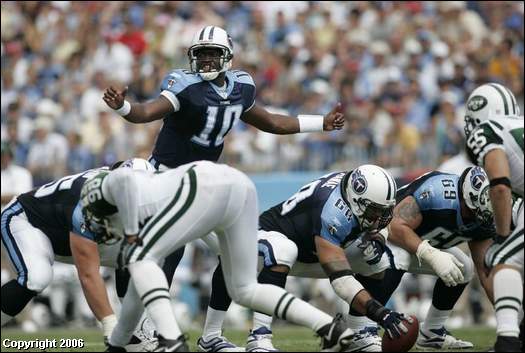
photo by Sanford Myers/The Tennesean

On Mack Simpson's Adverb Blog (UT ad grad and CD at Dieste Harmel) there is a wonderful and most excellent post with free advice for the budding jr. creative graduate or current student.

Everybody should take these to heart.

Monday, August 28, 2006

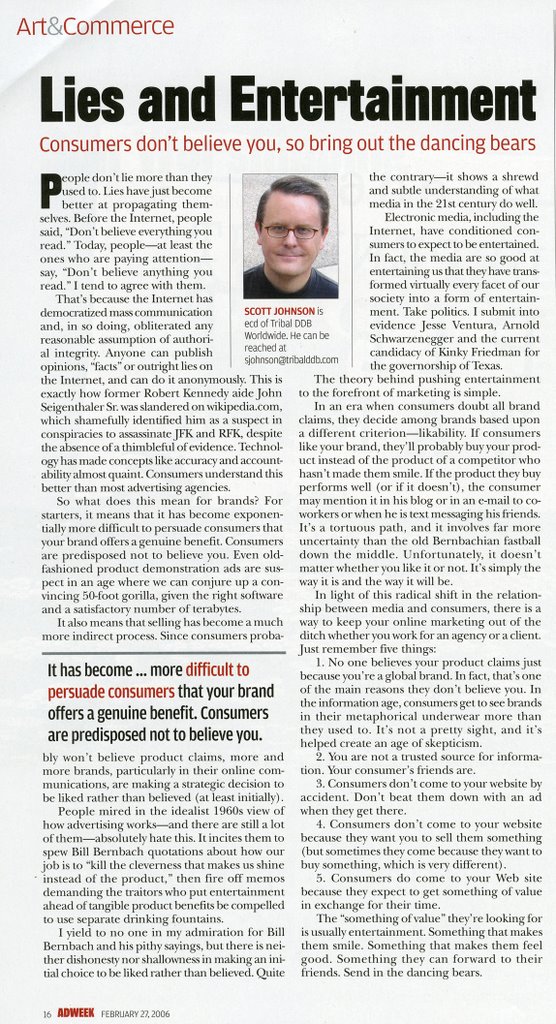
Advice: Use dancing bears in ads for success

click on image to enlarge.


Scott Johnson, the ECD of Tribal DDB Dallas, wrote a very pertinent and interesting article about modern day consumers and advertising in Adweek (02/27/06). I really like his style of writing; it's succinct and to the point.

I particularly liked this excerpt:

Technology has made concepts like accuracy and accountability almost quaint. Consumers understand this better than most advertising agencies.

from brand flakes for breakfast

Thursday, June 08, 2006

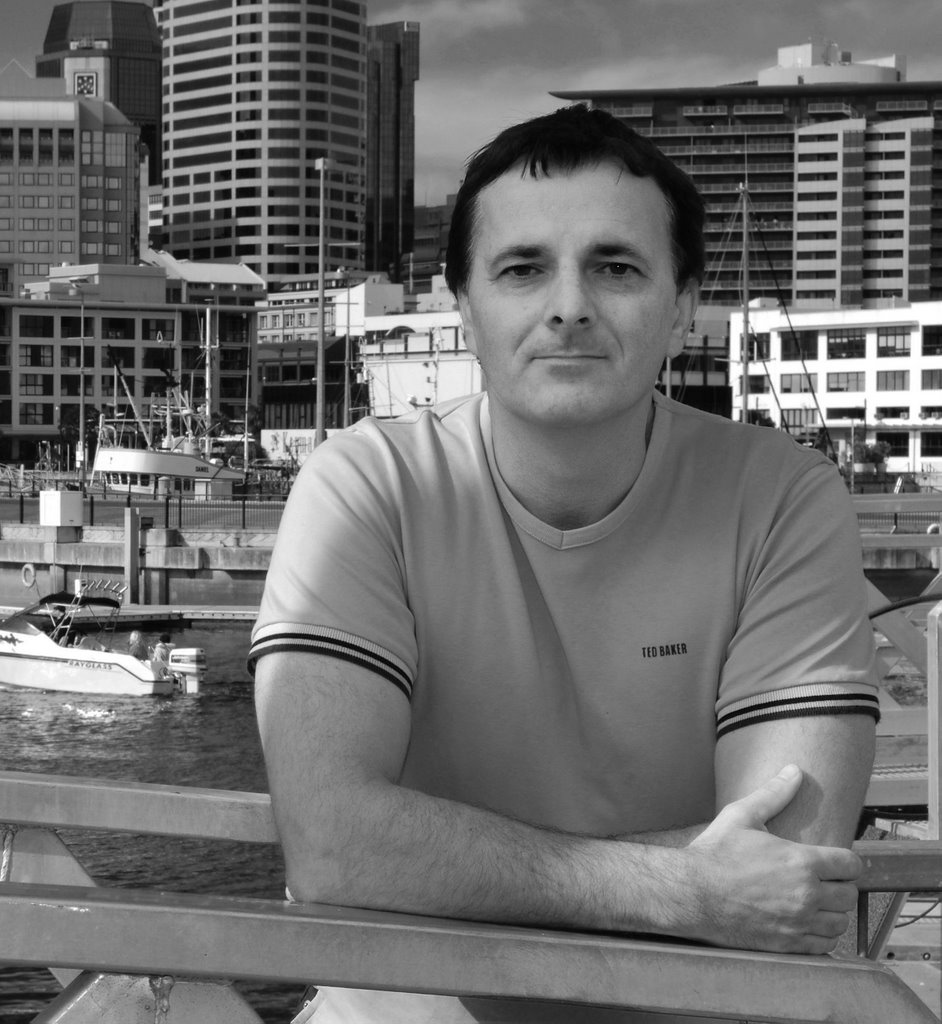
Interview with Mario McMillan


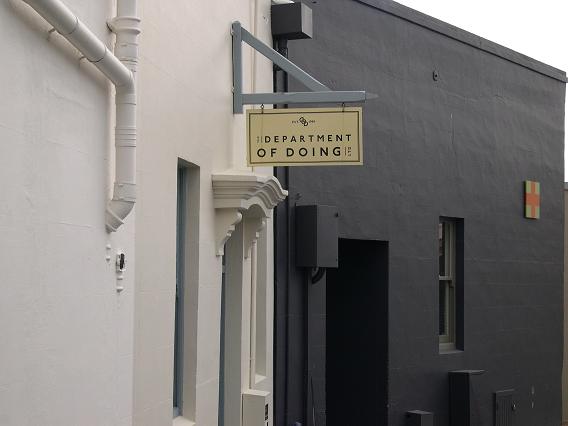
I first heard about The Department of Doing, based in Auckland, New Zealand, from the NY Times advertising e-newsletter. So, being the naturally curious person I am, I contacted them to ask about their stupendous name. To my surprise, the Creative Director, Mario McMilan, contacted me back.

Mario started out in the ad business as a suit. When the medication finally became too expensive and increasingly ineffective his only option was to join the creative department. Since then he has created campaigns for Alfa Romeo, Pepsi Cola, Pizza Hut and all manner of other international brands. He has worked for Publicis, BBDO and Ogilvy & Mather; in London (for 9 years), in Dubai (for 4) and has lived and worked in New Zealand since 1997. As well as being an award-winning copywriter and creative director, Mario’s passion for motorsport saw him leave the ad business for two years in Dubai, becoming a professional race instructor and competitor.

Mario now describes The Department of Doing as a ‘spiritual home’ without the excesses, egos and endless meetings of big agency life, so that he can, simply, get things done.


I read a quote from the director of The Department of Doing, Richard Hollingum, who said, "We have a plan for world domination. New Zealanders get things done. It’s probably a lot to do with the fact that everyone has come here from somewhere else, whether it’s just yesterday or a few generations ago.” Your communication agency name is one of the best ones I've ever seen. Did the name "Department of Doing" come out of this thinking?


I wouldn’t say the name arose directly from New Zealanders being a pragmatic, down-to-earth bunch – the progeny of pioneers – but it certainly means we are very much at home here. The name came about because of a sense of intense frustration. A lot of us at The Department of Doing are ex-agency and the reason we’ve been drawn here is because we saw too many fine ideas never happen when we were sitting inside major ad agencies.

As a creative person, I find this infuriating. I love creating things and that means seeing them happen.


What separates the Department of Doing from an advertising agency?

Superficially, we do many of the same things. We create press ads and TV ads and billboards, that sort of thing. And we do a lot of other stuff too. The real difference, I guess, is in our attitude and approach, and it boils down to this: we bring ideas to life; we make them happen. Sometimes they’re our own ideas, sometimes other people’s.

At The Department, we have a lot of sympathy for the notion that the conventional agency model is broken. And before I bring the wrath of Madison Avenue upon my head, I have to acknowledge that many agencies do some things supremely well. There are fantastic, world-changing ads coming out of Crispin Porter + Bogusky, Mother and longer-established agencies like Bartle Bogle Hegarty. Even the big groups are still pumping out great ads and great ideas. Right here in New Zealand, Saatchi & Saatchi, BBDO, DDB, Publicis Mojo and others are producing world-class work that will make you laugh, cry; fall in love with a brand.

But I bet any creative team you care to mention has a bottom drawer full of great ideas that never happened. And I’m not just talking about clients who rejected them. Just as often it’s because the agency is designed to produce certain things. And when your idea isn’t one of those things, you hit a problem. Business as usual won’t get the job done.

Let me just follow a train of thought here and - I apologise - it involves another well-known American educational institution: Stanford. Professors Jeffrey Pfeffer and Robert I Sutton there have published some great work on what they describe as ‘The Knowing-Doing Gap.’ We first read some abstracts a few years ago and then bought their books. And we simply couldn’t agree with them more. Encapsulating academic work in a nutshell can be a dangerous game but, hey, let’s go there. Essentially, they point out that organizations today are information-rich. They have more knowledge than ever before, greater ability to process it and there is a notion – very fashionable in ad agency circles – that success in the modern world is about the power of ideas. I mean, how often have you heard about Catching The Knowledge Wave or The Knowledge Economy or agencies describing themselves as Ideas Companies? Our view and, it would seem, the view of Pfeffer and Sutton is that generating loads of ideas that go nowhere is worse than useless. It employs resources in redundant ventures, it drains an organisation’s morale and it means you are going to get your arse kicked by competitors that actually make things happen whiled you sit pondering your next move.

There seems to be a gradual realization afoot that congratulating yourself on how great your ideas are and what a stupendous intellect you have is a path to failure. That what is missing is a focus on making those ideas happen. Agencies are realizing it too, and we’ve been working with two of the big international groups on changing their focus from being rather academic idea factories into genuine Doing organizations. It is not an easy change but it can be done.


A lot of agencies have corporate manifestos. Can you talk about The Directives of Doing?

For a start, I guess you have to appreciate a certain ironic sense of humour to ‘get’ them. The Directives are quite deliberately written with touch of flippancy. And that’s because they are so very important to us. They are immutable principles but we don’t want to be aggressive or arrogant or insensitive about it. We’ve seen enough of that in the agency world and we have no desire to promulgate it ourselves. But, as it says in Directive 7.a, we do refuse to work with people we neither respect nor like, or who wear grey shoes.

I’ve heard countless corporate Missions and Visions and Values and they all say the same thing, and they all sound like a fraud. If you read our Directives of Doing and you don’t get them, or it doesn’t raise a smirk of appreciation, you should never, ever consider working with us: whether you’re a prospective employee or Richard Branson about to give us your business.

A common perception of New Zealand is The Lord of the Rings, rugby, yachting, kiwis and the Maori people. But New Zealand also has the 19th highest standard of living in the world. What is New Zealand really like?

I hate to tell you this, mate, because it’s going to make you feel jealous: New Zealand is the best place in the world.

Now, I’m allowed to say this because I chose this country: I didn’t have the good fortune to be born here. I’m originally a Scot, spent most of my early life in England, traveled the world like a Gypsy and lived in Dubai for years before coming here. Like quite a few Kiwis, I now have dual nationality as a Brit and a New Zealander. My UK passport means I can live and work anywhere in the European Union. As a Kiwi I can live in Australia if I want. Courtesy of a very old visa from my Gypsy years, I could even stay indefinitely in the USA.

I choose to live in New Zealand for a lot of reasons. It’s far from perfect, occasionally drives me mad, and some things suck. But it has so much going for it. First, there’s a lot of space, which I like. Useable space, too. Aussie has loads of space but frankly you’d never want to venture into a lot of it and it’s often just endless, featureless and quite dull. New Zealand is beautiful, green, often wild and incredibly varied. I’m a keen trout fisherman, so need I say more?

The other really big thing that keeps me here is the creative environment. You might be surprised to know that New Zealand comes second only to the UK when it comes to winning creative awards per capita. New Zealand creativity is now also getting recognized in movie-making, in fashion, in technology, in wine-making, you name it. And because we are such a small country – just 4 million souls – interaction between these things is unavoidable. You’ll be filming a TVC with crew who worked on Lord of the Rings, briefing animation to people who did Shrek, talk wardrobe with the designers from World fashion and, at the weekend, stop in the winery that just won Gold at the London International Wine Show, where you chat about the Rugby with the guy who made the stuff.

That small community feel and the friendliness of New Zealanders is something I’ve got used to and I wouldn’t want to swap it for anything. I still love going to big, bustling cities and doing business there – we work in Singapore, London, Sydney, Melbourne – but it’s so nice to come home.

New Zealand’s also pretty sophisticated: you don’t really miss out on the niceties of modern life but there’s still a bit of earthiness about living here. There are probably few places in the world where you can enjoy such sophistication in direct proximity to real wilderness.

And the weather’s not bad too. Just make sure you come during your winter – that’s our summer – unless you’re a ski bum.




You all have done work with a clothing company, operating across NZ and Australia, that involved corporate coaching and psychology. You all have even trademarked this process as 'Pitchcraft'. Can you talk about this unique work? Would a typical advertising agency have undertaken this task?

The company is called Deane Apparel and they’re the biggest corporate clothing company in Australasia. They are the most professional and best-resourced company in the game here, with fantastic systems, access to many designers and a back-up for customers that’s second to none. They came to us having lost about a dozen new business pitches in a row: nearly always against smaller outfits who positioned themselves as more ‘fashionable’, even when some of the accounts were for huge industrial companies where you’d think functionality, economy and back-up would be top criteria.

The people at Deane were great. They had the humility to understand that they weren’t presenting themselves as well as they could. And they knew they were a bit ‘down’ and, maybe, that was being sensed by clients.

We immediately saw parallels with the ad business. They were pitching for big accounts, they were fundamentally selling a creative product and there are all the usual issues of performing on the day, making a connection with people, chemistry etc. Their real-world abilities were excellent. But they had to wow the client at the pitch and they weren’t doing that.

We could help them do flash documents but, ultimately, they would have to connect with the client.

We began by getting them to talk and talk about their business, the clients, the job they do, their staff, everything.

What emerged was that their clients were viewing the purchase of apparel at a ‘brand’ level and Deane were talking at an operational level. We had to get the guys to be more brand-literate and to present what they were doing as part of a higher intellectual discipline. 90% rubbish, of course, but you’ve got to know your customer. And the key to all this was that Deane had never examined their own brand. We undertook a brand review of Deane. It was a bit of a catharsis because it forced them to look at and define things about themselves that they’d always ignored.

To cut a long story short, after the team there had been through all this they had a pretty deep understanding of the semantics and process of brand development. So when they next had a pitch they were operating at an entirely different level. They won it, and it was a big one: McDonald’s. They’ve since won five in a row and put on millions of dollars of revenue.

And the only bit of ‘creative work’ we’ve produced for them was a staff poster for McDonald’s new uniforms.

I really can’t give any detail about PitchCraft in general. Partly because it’s a proprietary secret but mostly because it will vary hugely depending on individual organisations’ needs.

Can you also talk about what The Dept. of Doing did for Chevrolet?

The Chevrolet job was one of those classics that goes straight into most agencies’ Too Hard basket.

General Motors had owned Korean car-maker Daewoo for a number of years. As a brand, Daewoo had a pretty poor rep everywhere except Korea. With the backing of research, GM decided to change the brand to Chevrolet, starting with Asia-Pacific.

Now that’s fine and dandy, until you look at the logistics. Fourteen countries and about seventeen languages. Scores of thousands of vehicles sitting around badged Daewoo. Hundreds of thousands of new brochures to be made. Every dealership to be re-branded. Guides required for everyone on how to rebadge, retouch and otherwise change everything they have in their possession from Daewoo to Chevrolet.

As well as line-producing all the new photography in New Zealand for the launch campaign, we produced a ‘bible’ and resource kit that showed every step required to effect the changeover.

I wouldn’t say it was the most sexily creative job we’ve ever done, but it sure was effective.


What is The Independent Network of agencies and how does that help The Department of Doing?

The Independent Network does exactly what it says on the tin. It’s a worldwide network of agencies that are completely independent of the big groups. It think there’s something like 80-odd agencies in 74 countries, and we can all use one another just like an international network.

For example, we have been used as an extra creative resource by agencies in Taiwan, Singapore and Kuala Lumpur when they’ve had a big campaign or pitch to crack out. Agencies pay one another on agreed rates, but its handy to know we could call on resources anywhere in the world. We also have a commitment to provide a certain amount of help, on request, without charging. And that’s really useful when you’re researching what might be going on in other markets.

Compared to the big groups, IN doesn’t provide legions of proprietary tools and research, but I’d say you still get 90% of the benefits.

In an interview I did with Ignacio Oreamuno, he talked about how business in other countries is very different than the US. What is doing business like in NZ compared to doing business in the US?

I wouldn’t say I have a lot of experience doing business in the United States, unless you count my days as a Busboy at Western Steer Family Restaurant in Myrtle Beach. But I have worked with many Americans internationally, ranging from clients to my Art Director.

I think there’s a very distinct American business culture, which you’d expect, and one of its important facets is its internationalism. The world’s most successful global brands are mostly American; Americans have proven themselves as global marketers like no other nation.

That’s not to say that there haven’t been occasional culture clashes or failures. But the smartest American businesses are great at seeking out local talent to make them successful.

The contrasts and similarities between national business – and specifically advertising – cultures are, I think, fascinating. I talked before about the extraordinary creative performance of New Zealand relative to our size. I wouldn’t be the first to ponder on why that should be. New Zealand inevitably first compares itself to Australia, and we significantly out-perform the Aussies creatively. Why should that be?

The popular culprit is corporate culture. Australia has four times our population. Businesses are bigger, there are more management tiers and, undoubtedly, doing business is more formal there.

In New Zealand, it’s just you, me and the farmer’s dog. As a creative, there’s a much shorter line between you and the client CEO. That has its problems but it’s also an opportunity. If you believe passionately in an idea, and you can articulate why it’s right, there’s a strong chance you’ll be listened to. Client’s here are more prepared to stick their neck out and take a risk – to trust their own judgment and that of the people they’ve gathered around them. Researching things to death doesn’t happen that frequently, simply because we can’t afford it: our budgets are very small and those few grand you spend on the research could be used to make the ad better or buy more media.

It’s a way of doing business that creatives find attractive. You’ll find quite a number of top names here, out of the UK and elsewhere, and they’ve been attracted as much by the standard of creative work as the lifestyle.

My experience of American agencies and clients is that they’re more process-driven, more formulaic. Great work still gets done - some of the best in the world - but the hit-rate isn’t as high as the UK or NZ.


Is it better for a jr. creative to start out at a smaller, multinational agency like yours (or a Strawberry Frog) or a larger, national agency?

I don’t think the size of the agency matters, only its quality and commitment to great creativity. The worst thing you can do is go into an agency where creativity is tolerated rather than celebrated. There are places out there like that – I’ve worked in some of them – and it can seriously inhibit your career.

Just as essential is the culture of the place and that means the people. You’ve got to trust the people you work for and work with. You’ve got to feel that you want the same things

What's your personal creative philosophy?

Always try to make every job the best YOU can make it. And by that I’m talking about the power of an individual voice. Most advertising is crap, because it looks like it satisfied a corporate committee. Good advertising seems like a real human being is telling the story.

The other part of the equation is: never forget the guy on the couch. As creatives, we have to connect with our target audience. What never ceases to bemuse me is how out of step with people’s ordinary lives most business folk are. And ad people can be some of the worst offenders


What is the top ten list of advice you have for jr. creatives?

1. One day, you’ll discover your voice. You may already have found it: Bravo. Otherwise, you’ll be just like the rest of us: struggling to put our imprint on things; mimicking others, steering around what’s been done before There is absolutely nothing wrong with this, just make sure those people are the best. And choose a wide range of folk. Finding your own voice, and gaining respect for it, will take time. Get inside another voice that you respect and make it your own. In the meantime, you’ll be producing quality work even if it’s not your first novel. There’s a quote I just found and have pinned on my wall: from Steve Jobs, who may not be an advertising creative but is one of the most creative souls on our planet. It says: “Your time is limited, so don’t waste it living someone else’s life. Don’t be trapped by dogma, which is living with the results of other people’s thinking. Don’t let the noise of others’ opinions drown out your own inner voice. And most important, have the courage to follow your heart and your intuition.” I couldn’t put it any better than that.

2. Everyone wants to be a genius, because that seems easier than really working at it. Forget it. Making great advertising is more akin to building a precise and excellent brick wall than you might like to think.

3. Be very careful about listening to criticism. There are those whose advice you must heed. And a lot more who will stop you from flying. Identify the former; ignore the latter.

4. Be wild. As wild as you were before you got a job. You are hired to be creative, not corporate. I’ve met much crazier people outside creative departments than inside.

5. Find a mentor. You might have one at university, and you’ll know how valuable they are. If you join an organization, find someone. Most of us older wash-ups are actually pretty flattered to find someone who wants to know what we know.

6. Never, ever give up. If you are looking for your first gig, you are going to comprehensively learn the meaning of rejection. Try, try, try again.

7. Start your own brand #1: If your ideas are so good, back yourself. If you think you know how to market better than the client, then you should do it. If you’re right, you’ll succeed and be the next phenomenon. If you’re wrong, you’ll learn a very valuable lesson

8. Start your own brand #2. We work in an industry that creates images, positionings and strong, salient brands. Most of the top people in our business have all of those. They are brands. You need to be too.

9. Remember the guy or girl on the couch with the remote, the page in their hand, the mouse hovering on the ‘back’ button. Nobody owes you their attention, so you’d better be saying something special to warrant it.

10. Love every moment you spend in this business, because you could be doing a real job someday.

How do you become a better creative?

Craft and graft. And I don’t mean bribery. Graft, at least in the UK, New Zealand, Oz etc., is most often used in the sense of hard work. And there’s no substitute for it. Keep producing ideas, because the more you have, the more you will have. Some people I’ve met act like they have a finite supply of ideas and they don’t want to give them away. My experience is the exact opposite. A good idea usually begets a great one.

Craft is about refining your work. This takes something that is usually in short supply: time. Do everything you can to create sufficient time and use it to do the best job you can. I find it’s important to step away from work and forget about it before going back and crafting it again. This may not make you a better creative but it will produce better creative work. So people will think you’re a better creative. It will also force you to think in detail about why an idea, and every facet of its execution, are right. But know when to stop fiddling, before you kill the spontaneity.

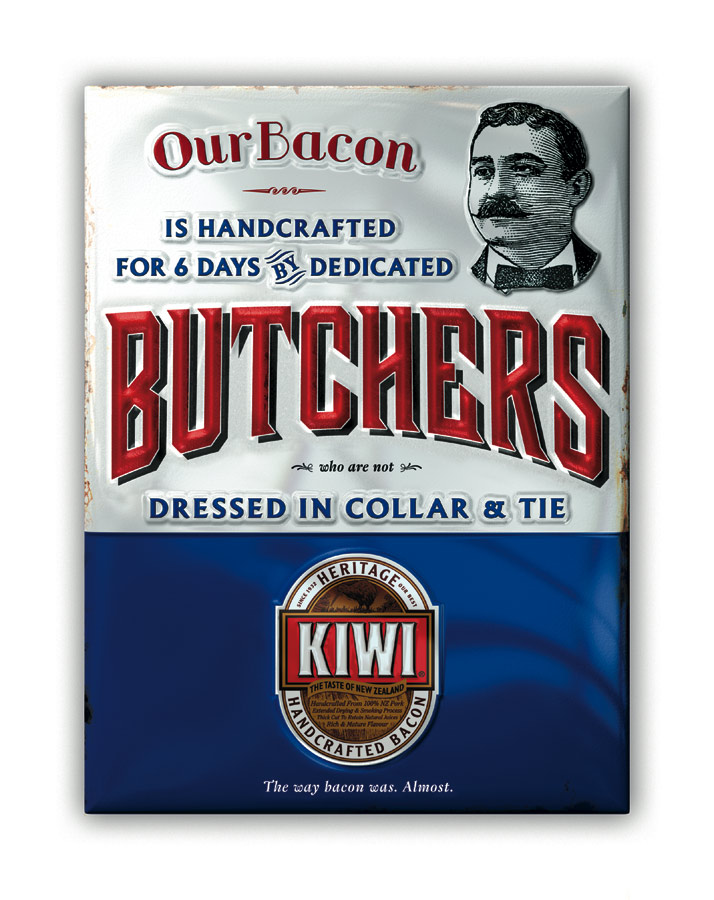
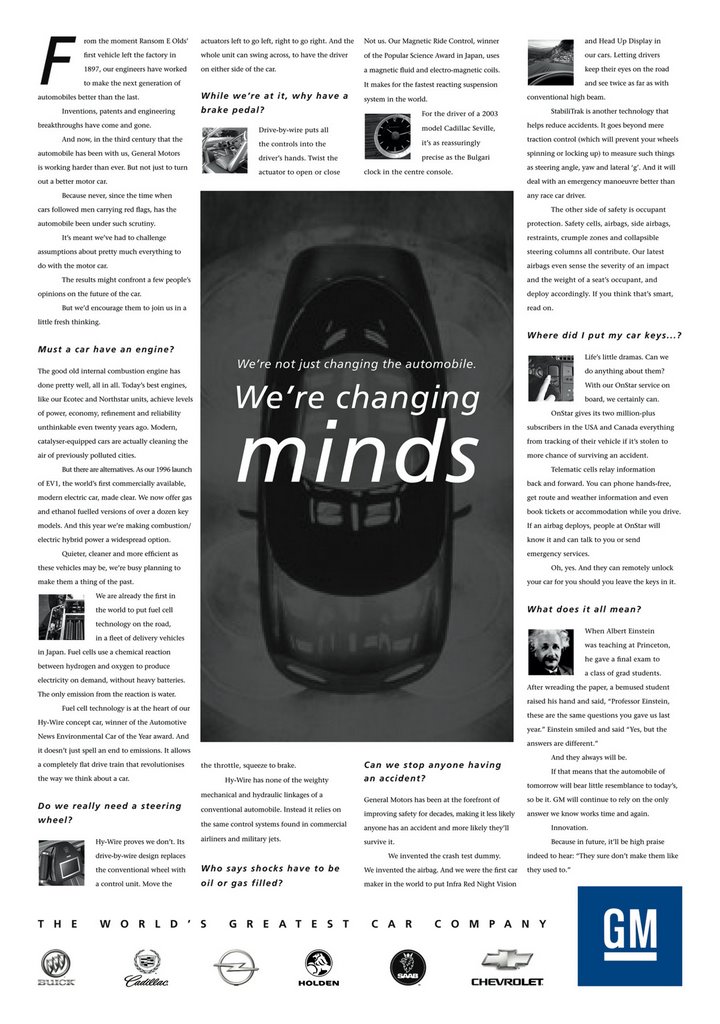
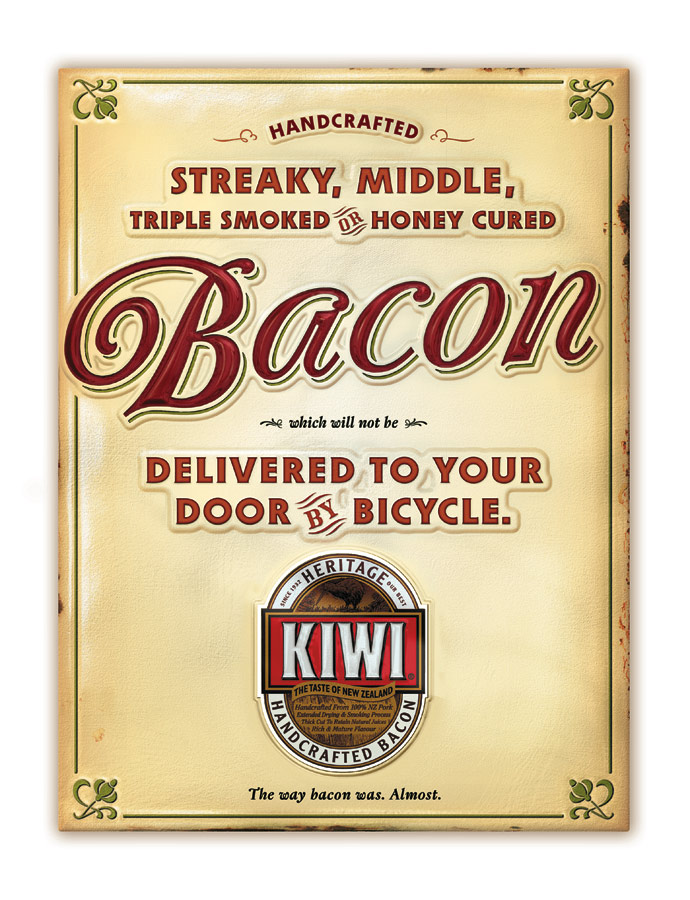
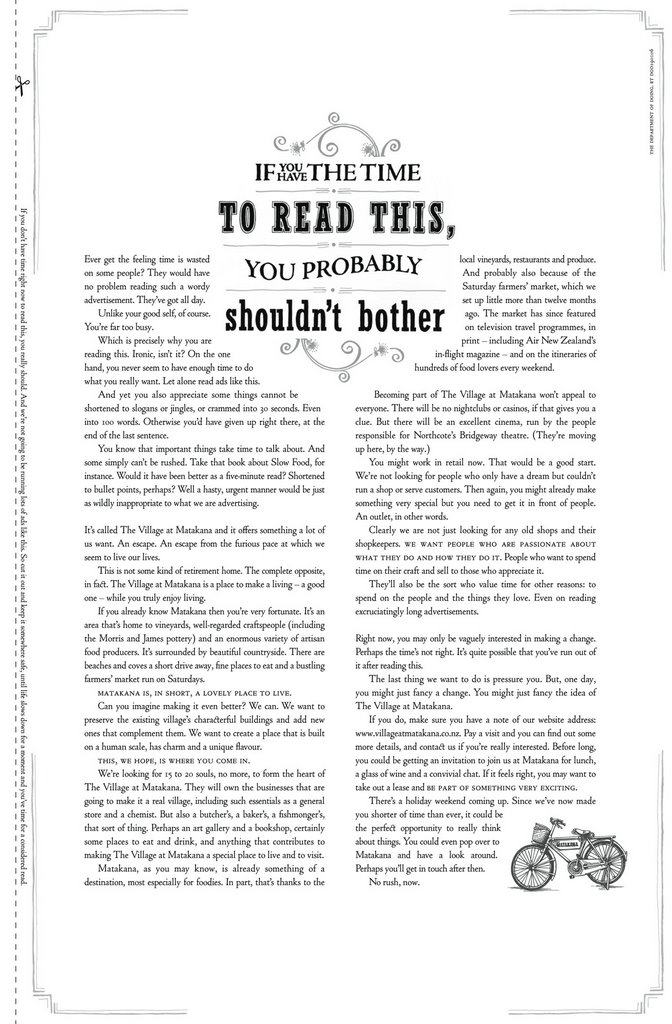
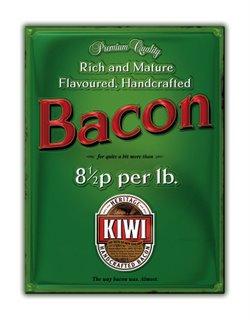
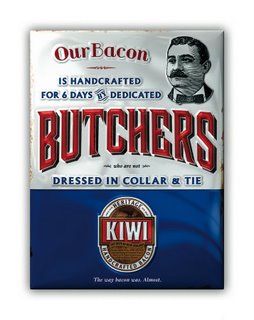
Here are some samples of DOD's work. When I saw these my first reaction was wow, they have long copy and a sense of humor. Click on image to enlarge




Wednesday, May 17, 2006

A Portfolio

Well, since this is a blog by Texas Creative students, it's only fitting that we have some portfolios up. I'll kick things off:

Now, this is an advertising blog so I'd prefer to put up some of my ad work. However, my ads aren't quite ready so I'll just put up my design work for now. Comments and criticisms are welcome, employment prospects are encouraged. =)

Creative Underdog

I'd also like to encourage my fellow creatives to submit their work. I've been tracking the Ranch's statistics and can see that it's been getting an increasing amount of attention. This would be a good chance to network and get your stuff seen, so get in touch with me or David so we can link ya up. And if you don't have anything online, I'd be glad to help you get something started.

Sunday, April 23, 2006

Interview with Peter Rosch


I recently asked Peter Rosch about his time at UT and how he switched from being an AD to a CW. He also talks about how crucial it is to have a good partner. He is currently an Executive Creative Director at Lowe in New York City. And you know those ESUVEE ads that everyone was talking about in 2004-2005? Well, Peter certainly does; his partner, John Hobbs, and him created those.

brief biography taken from UT advertising homepage

"After graduating from the University of Texas in 1995, Rosch first went to work for Young & Rubicam as a Junior Art Director. At Young & Rubicam, he was promoted to Senior Art Director, but he eventually left to work at the Cartoon Network, Kirshenbaum Bond & Partners and BBDO. He has been both a copywriter and an art director. Rosch moved to J. Walter Thompson (JWT) in 2000 where he met his partner, John Hobbs, an art director from Detroit. They left JWT to freelance and then moved to permanent positions at Bartle Bogle Hegarty (BBH) after starting to work on the Levi’s account.

Rosch and Hobbs have been a successful team, creating the Levi’s spot “Dangerously Low” that won silver and bronze Clio Awards. Their “Atlas Bakery” spot was recently place in the Museum of Modern Art as part of the permanent collection, something Rosch considers the highlight of his year and perhaps his career..."


How did you get into advertising?

I took the intro to advertising class as an elective. A friend of mine had taken it, and he loved it but didn't get the grade to move forward. He was taking it again, and i needed an elective. At that point I was two years into school, and had changed my mind on majors multiple times. I enjoyed the class very much, and needed to major in something to get my mom and dad off my back, so I picked advertising – but only after I made the creative sequence.

I toyed with being a photography major, and might have done so had I not made the sequence. Even after picking it as a major, I don't think I really thought I’d actually go straight into it after school. But after visiting New York on the Spring Break trip (with Texas Advertising Group-TAG? ), I fell in love with the city, and advertising seemed like the quickest way to get there.

Who did you have for portfolio classes? Has Deb's hair always been "reddish"?

I had Jack (can't remember his last name), Patricia Alvey, and Deborah. I don't recall it being reddish back then, but that was a long time ago.

Do you miss Austin? Do you miss Texas?

I love to visit Austin, and the rest of Texas, but truth be told I don't miss it much. I miss my immediately family who all still reside there. I could see living in Austin again someday, but probably not until I retire. I miss the food in Austin. New York has some great restaurants, but there's nothing here like The Salt Lick, Trudy's, Texadelphia, etc.

I miss the warmth, as New York is cold for a good part of the year. Even so, I have so many great friends here, and I enjoy the energy and opportunities that New York offers.

How did TX Creative and UT prepare you for a career in advertising?

Well, at the time, you pretty much worked as art director and copywriter on all your own stuff. Pairing up wasn't really encouraged. I think this helped and hurt. It helped me develop skills in each, and an appreciation for what it takes to be either, but it hurt me when it came time to work with others. I was really confident that I could do both, and wasn't that cooperative with partners at first. The University’s reputation in the business, and the network of Texas Exes was certainly helpful.

A big part of getting a job is connections. Remember everyone you talk to or meet, and use any connection you have to get that first break. It might feel like you are being a pest, and you are, but everyone is used to it. And anyone worth talking to will remember how it felt to be looking for that first job, and should give you some time.

You've worked at Y&R, Cartoon Network, Kirschenbaum Bond & Partners, BBDO, JWT, BBH and now Lowe. I would assume that each agency has it's own unique culture. For example, because BBH is British they might have a different slant on things. Also, agency size also affects things. Can you talk about this?

It would take me a while to answer this completely. They have all been different for sure; take Cartoon Network out of the mix though and there would be one thing the others all have in common: it took a lot of things to happen (luck, a client in a good mood, an account person willing to fight, a creative director who didn't want to sell his own stuff first, and so on) to get a great idea bought, and produced. There are many obstacles in the way of ideas, I suspect there has always been, but it seems to me that everyday someone creates a new title or test, or layer that makes getting an idea through the process that much harder. BBH was smaller than the rest, but it was still a very rigorous process to get an idea bought and produced.

Why do you think the turnover rate (switching jobs) is so high in the advertising industry?

I think creative people need change. You need new surroundings, and opinions, and faces to keep fresh. Or it could be because it's the easiest way to climb the ladder in title and salary. It’s probably a little of both.

Having a great coworker/partner is crucial in advertising. And you've, obviously, found a great partner in John Hobbs. How did y'all (Texan for you + all) "click"? What makes a good creative partner?

John Hobbs is a god to me. Not a day goes by that I don't thank my lucky stars to have him as my partner and friend. And it is important. Working with someone that you don't quite mesh with, makes life miserable. I say life, because it is more than work. In this business you see your partner a lot, more than your friends, spouse, girlfriend or boyfriend. I'd put it at roughly 70% of the hours in a week. It's sick when you think about it too hard. I don't know if there is anything black and white about what makes a good creative partner. For John and me it has been mutual respect for what each brings to the table - talent, hard work, and a healthy dose of hatred for many aspects of this industry.

A lot of students face the "Am I a CW or an AD?" dilemma. How did you figure it out?

I left as an Art Director. My first job was as an Art Director. In numerous interviews with agencies here and in San Francisco I was told that my writing was very good, and asked if I had considered being a writer. I just didn't want to do it. I liked writing, but I really like the control an Art Director has over the final product. My first partner, Darren Wright, is an excellent writer with no ego. He let me write a lot of the time, and after a while, I just realized that I enjoyed writing more. Truth is you end up doing a little of whichever you aren't anyway - if that makes sense. There is one other factor in my decision to switch - ART DIRECTORS PUT IN WAY MORE HOURS THAN WRITERS. You spend all this time trying to concept the idea, and then someone approves it, and there's maybe a day to get it ready for the meeting, and the Art Director now has that responsibility. I've always tried to help John as much as I can, but in the end, he still puts in way more actually hours. It's just the nature of that position.

Is it hard going from Jr. Art Director to Executive Creative Director? What new challenges/responsibilities does being an ECD entail?

It was hard I guess. I've never really though of it that way. I took a lot of leaps when others advised me not to, and I think every time I did it worked out for the best. It was very difficult to leave BBH, because it is a great place to work, we were doing great work, and we had some incredible friends, but again - we needed a new scene, and I was really drawn to the challenge of being the ECD of a New York agency with a lot to prove. The biggest challenge so far has been finding time to do actual work. You can lose yourself in meetings at any level in this business.

For lots of people having meetings is their work, so they don't have any reason to keep it under thirty minutes, but as a creative you just want to get back to thinking about ideas. So, the many demands on our time have been challenging, but I really love it.

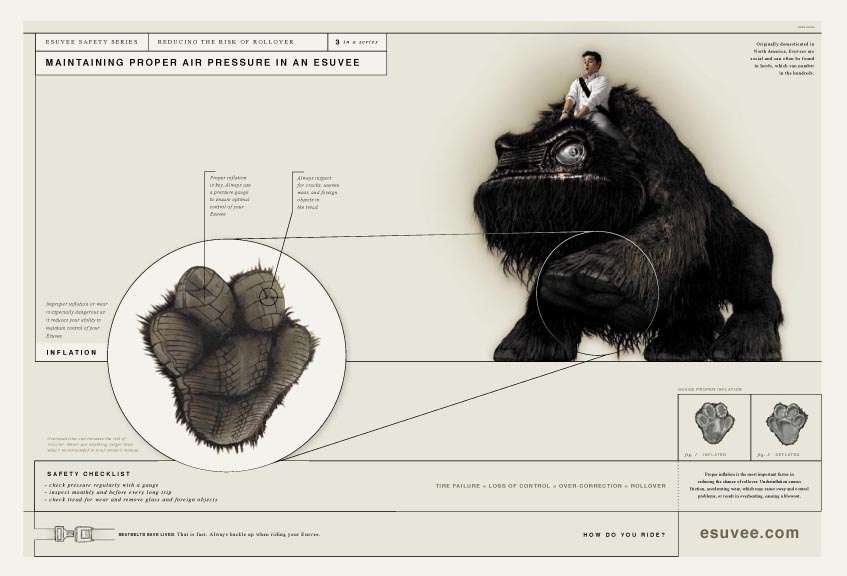
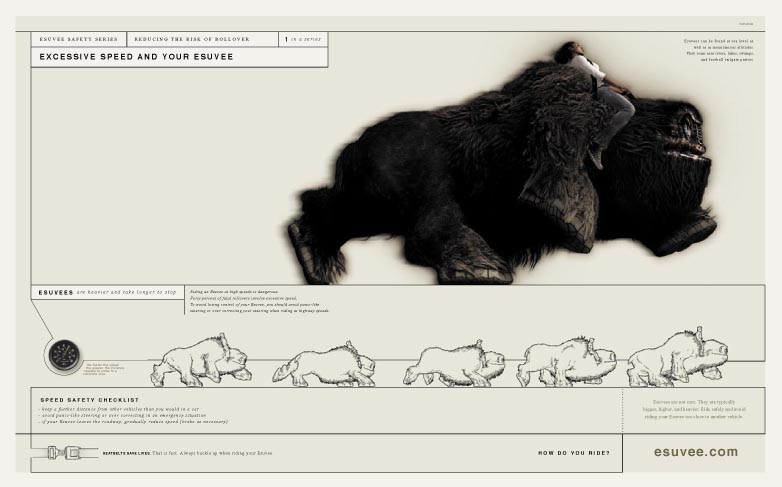
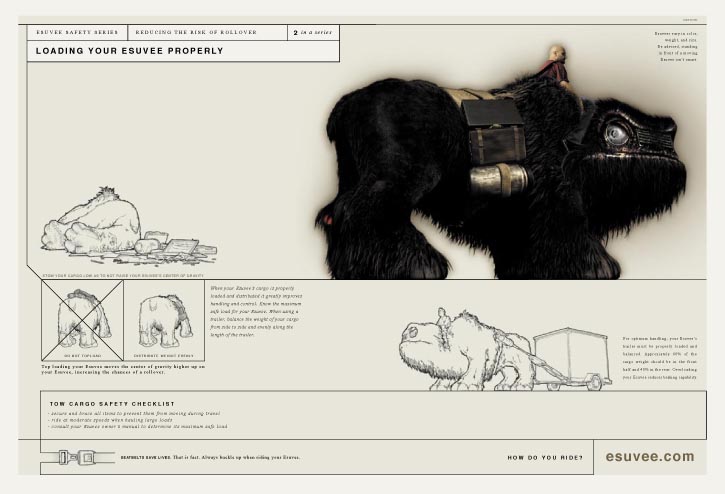
I read that "The Esuvee campaign has drawn the ire of SUV enthusiasts, who are suspicious of its lawsuit-inspired origins, and SUV critics, who say it glamorizes the problem without getting to its root." Can you talk more about the Esuvee campaign? How did the idea of it come about?

Well, I thought it was a pretty complicated subject, so i wasn't surprised to be attacked from both sides. I think we did a great job of talking to the target about driving safer, without preaching, or using scare tactics. Our clients, who were incredible by the way, were all lawyers - District Attorneys from eight different states. They had enormous cajones to go with that idea. They could have done something very safe, that both sides would have ignored, and our target would have ignored it right with them. I still marvel at all the links the word "esuvee" gets on Google.

click on image to enlarge


Your "Atlas Bakery" TV spot for Levis, is in the Museum of Modern Art's (NYC) permanent collection. You've also won Cannes, CLIOS and other awards for Miller and Levis. Of all the work you've done, what are your personal favorites?

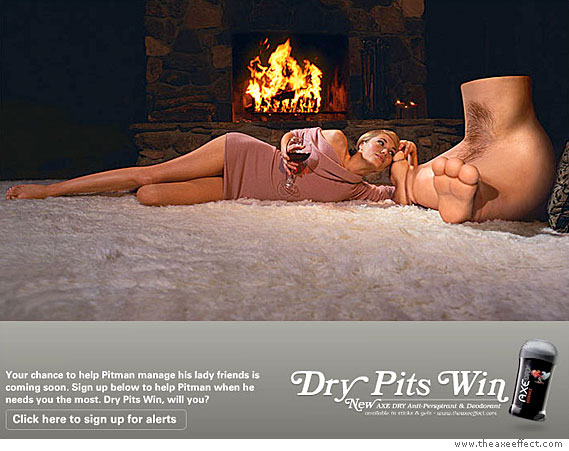
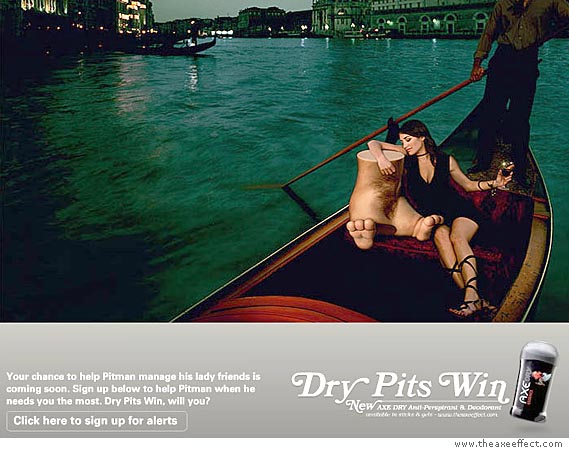
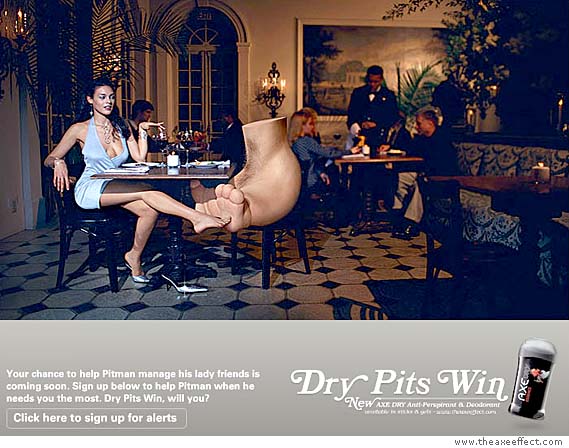
I think the work we did for Axe Dry with Pitman was probably my favorite. It never won a damn thing, but it always makes me and john laugh, and it was a huge challenge to get that campaign sold. Never was quite sure why it didn't win anything. It was quite polarizing to the public, so i assume that it was equally polarizing in the jury rooms. But, we produced and moved something like 20,000 Armpit Keychain Toys, and it was available on eBay, and written about by some people who hated it by major publications. That response far outweighed winning anything.

click on images to enlarge


What's your personal creative philosophy?

Fear. Lots of people are going to see what you do, and you don't want it to suck.

What's your top ten list of advice for Jr. ADs and Jr. CWs?

(in no particular order)
1. Hold out for the job you want.
2. If you can't get it take one somewhere, and get in the biz (don't keep working at chili's and living at home.)
3. Meet everyone you can, and don't forget them.
4. Investigate where you are going to take a job - who is your boss, what has he done that makes you think you'd like to work with him, and who will you be working with.
5. Bust your ass, but make time for something outside of advertising or you'll burn out.
6. Your mom and dad do not understand this business, so don't get frustrated when they hate you for not taking a job at Grey.
7. Accept that this is a business and not Art, but push to make it more like Art everyday.
8. Don't ever stop trying to make your book better, but only listen to people whose work you admire.
9. Invest in your 401K the minute the company lets you!
10. And finally, invest in your 401K the minute the company lets you!

What does one need to do to sustain a career in advertising and not burn out?

Remember to live a life outside of advertising. Not as easy as it sounds.

How do you get over mental blocks?

I walk a lot. If that doesn't work I drink. If that doesn't work I see a movie. If that doesn't work I ask John for an idea. If that doesn't work I run a brief by my mom. If that doesn't work ignore it.

I've experienced and heard that advertising is a learn-on-the-job business. For example, getting work approved through multiple levels is an eye-opening process. But at the same time Tx Creative prepares you by helping build a sound strategic thinking foundation. What else can a portfolio program do to help prepare students?

If I knew I'd open my own portfolio program.

What was the best advice given to you?

Best advice was from John Hegarty who told me "to come in late and leave early" when it comes to storytelling. He was totally right, but until he said it, i didn't notice that most of my favorite things did exactly that. In other words, it can be a lot more powerful to let the viewer fill in the blanks. You can find our spot for Levi's French Dictionary (it stars Gael Garcia Bernal of The Motorcyle Diaries fame) on youtube.com as an example of this. As a viewer you get what's happening, but you watch and wonder what must have happened before, and the "what will happen next" is left to the viewer's imagination too. It's like a good horror flick, you don't have to show somebody what happens when you take a chainsaw to a person's midsection - a viewer's imagination will probably do a way better job of making them squirm.


What is some work out there today that you really like?

Right now I am absolutely in love with the adicolor short film, pink - written and directed by Charlie White. I'm not sure where you can find it, but you should. Honda's Grrr spot last year was everything a great ad should be, and then some. I never once grew tired of watching that spot. That is very very hard to accomplish.

adidas- adicolor: Pink

adidas- adicolor: Blue

adidas- adicolor: Green

Mark Wnek has really assembled an all-star Creative team at Lowe with you, John Hobbs, and Fernanda Romano. What do you foresee for Lowe? Does Fernanda (she's Brazilian) ever rag on Americans about the World Cup?

What do I foresee for Lowe? Nothing less than world domination of course. Fernanda has dissed American beaches many times, but hasn't mentioned the World Cup once.

Here are some samples of Peter's print work and some screen grabs of the ESUVEE, Atlas bakery, and new work he's done at Lowe.


About Us / Privacy Policy and Terms of Use / Contact Us
LEGAL STUFF: The views expressed on The Ranch are not officially representative of the The University of Texas at Austin. © 2008. All rights reserved. Founded by David Wen, with Silver Cuellar's help, on a lonely February 14, 2006 in Austin, TX for the benefit of all.